
What is the single most important factor that contributes to happiness?
Lessons from Harvard's longest study on Happiness!

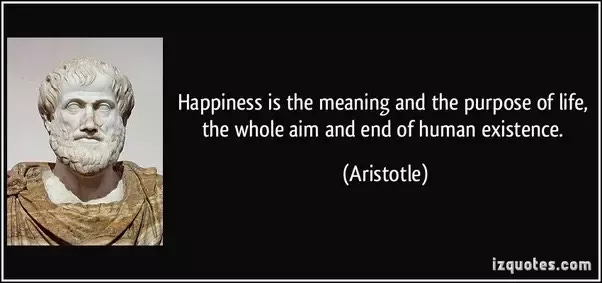
Aristotle, the greatest philosopher of all time has clearly identified that the sole purpose of life is to be happy. Whatever we do in life, starting from education, jobs, relationships, switching careers, marriage, giving birth, working on ourselves, earning money and the list goes on and on but if you drill down enough to “why I am doing what I am doing?”, after 2-3 layers, you’ll realize that eventually, everything is to be happy at the end of the day.
True success in life is never about earning millions of dollars of rupees or living a lavish lifestyle but it is to get up every single day and feel happy about the life you are living!
Money is merely an acknowledgment of how much value you’re providing in the world. The more value you provide, the more financial abundance you’ll attract.
But if it’s all about being happy, how to be happy? What makes a happy life?
Well, great question!
Thankfully, it was also a great question for Harvard researchers to work on, and hence for over 80 years, Harvard University has been conducting a study on happiness, tracking the lives of 724 men from various backgrounds and socioeconomic statuses to identify the factors that contribute to a happy and fulfilling life.
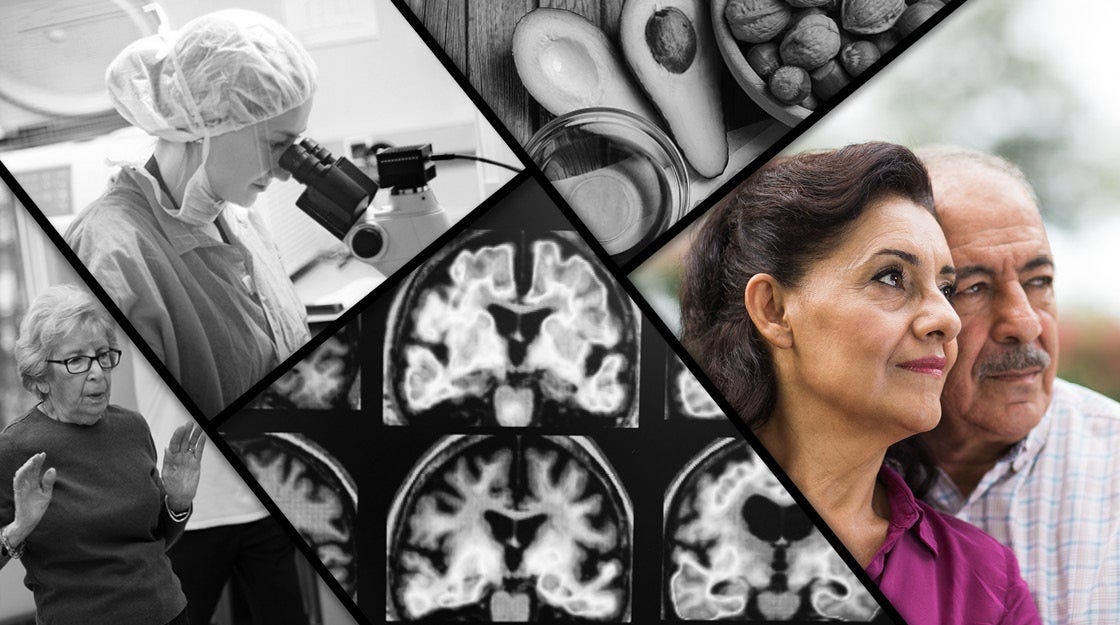
The study has uncovered some valuable insights into the secrets of a happy life, which can be applied by anyone to improve their own well-being. Let’s dive deeper into it but before that, you might ask…
Why would you care?
Well, that’s another great question. The answer to this question is pretty straightforward, why would you not want to live the best life when you can?
Personally, it was more about if I was going to invest now in my future best self, where would I put my time and energy?
This study answers this quest of mine and I hope it will answer yours too!
What is the single most important factor that contributes to happiness?
Robert Walidger, the fourth director of this study has stated in his TED talk, that the single most important factor that contributes to happiness is not money, not fame but Healthy Relationships.
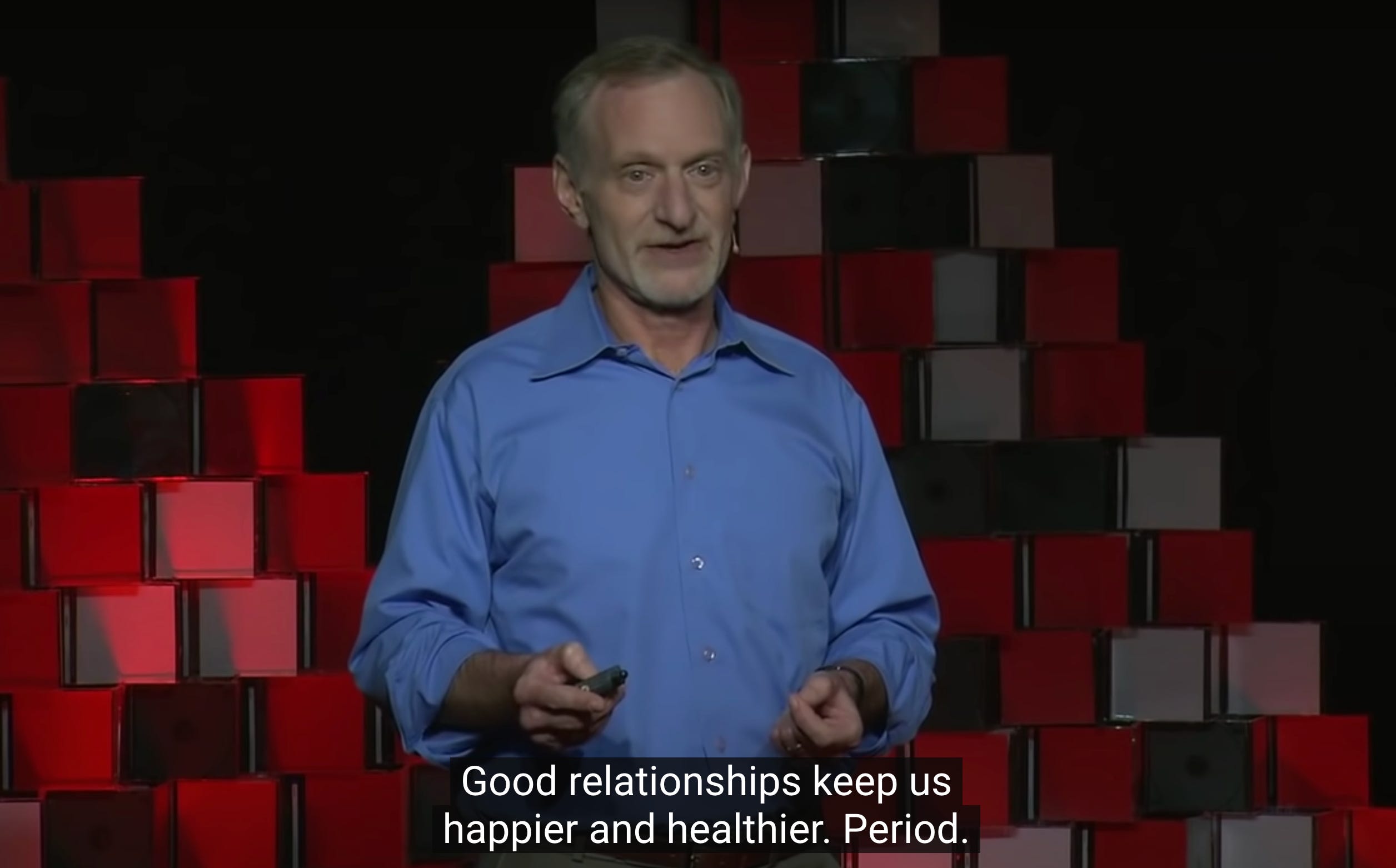
The study clearly states that warm personal relationships increase our health, happiness, and eventually our financial success as we start to feel happy in our day to day which brings more value out of us towards the world.
Here are my takeaways about a happy life from reading the Harvard Study of Adult Development, Robert Walidger's book - The Good Life, and a lot of articles on the same subject.
1. Cultivate Relationships
As the study clearly states the importance of healthy relationships, cultivating healthy and happy relationships is the key to living long-lasting life for the best. Investing time and effort in building and maintaining close relationships with family, friends, and partners can provide a sense of purpose, belonging, and support.
Surround yourself with people who are helping you learn and grow and get rid of any anchors that are pulling you down or making you feel bad about yourself. Seek good friendships and always be in charge of giving what you want to get.
In most cases, we get back what we reflect and hence it’s super important to focus on what you are bringing to the relationship. Ask yourself, how will you behave if this is the last time you’re seeing this person and I am sure it’ll be worth it.
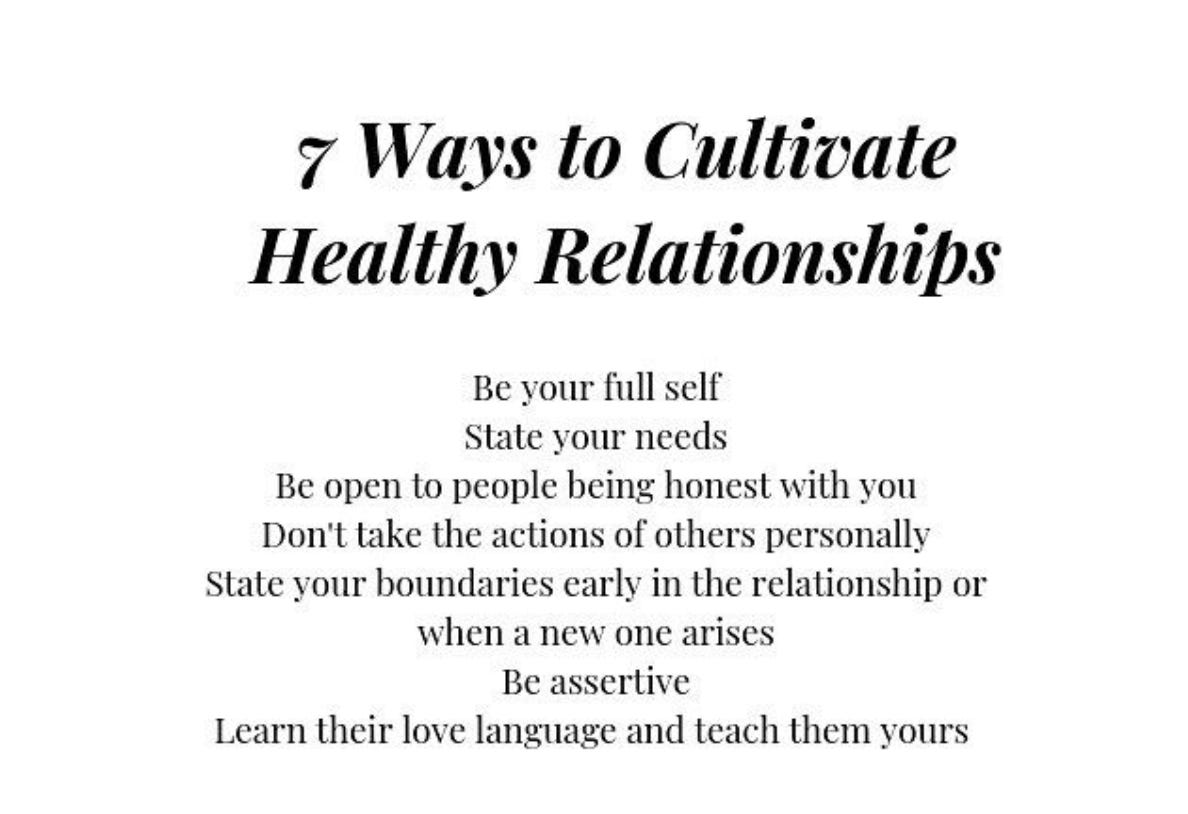
You get what you give is the biggest motivator towards doing good better!
2. Practice Gratitude
“Whatever we think about and thank about, we bring about”
Gratitude is the most powerful catalyst for developing your dream life. Expressing gratitude and appreciation for the good things in life can increase feelings of happiness and well-being. Focus on the positive aspects of life, and take time each day to reflect on things you are grateful for in your gratitude journal, no matter how small they may seem like having a nice home, conversation with friends, food to eat, or even as basic as the ability to read this article.
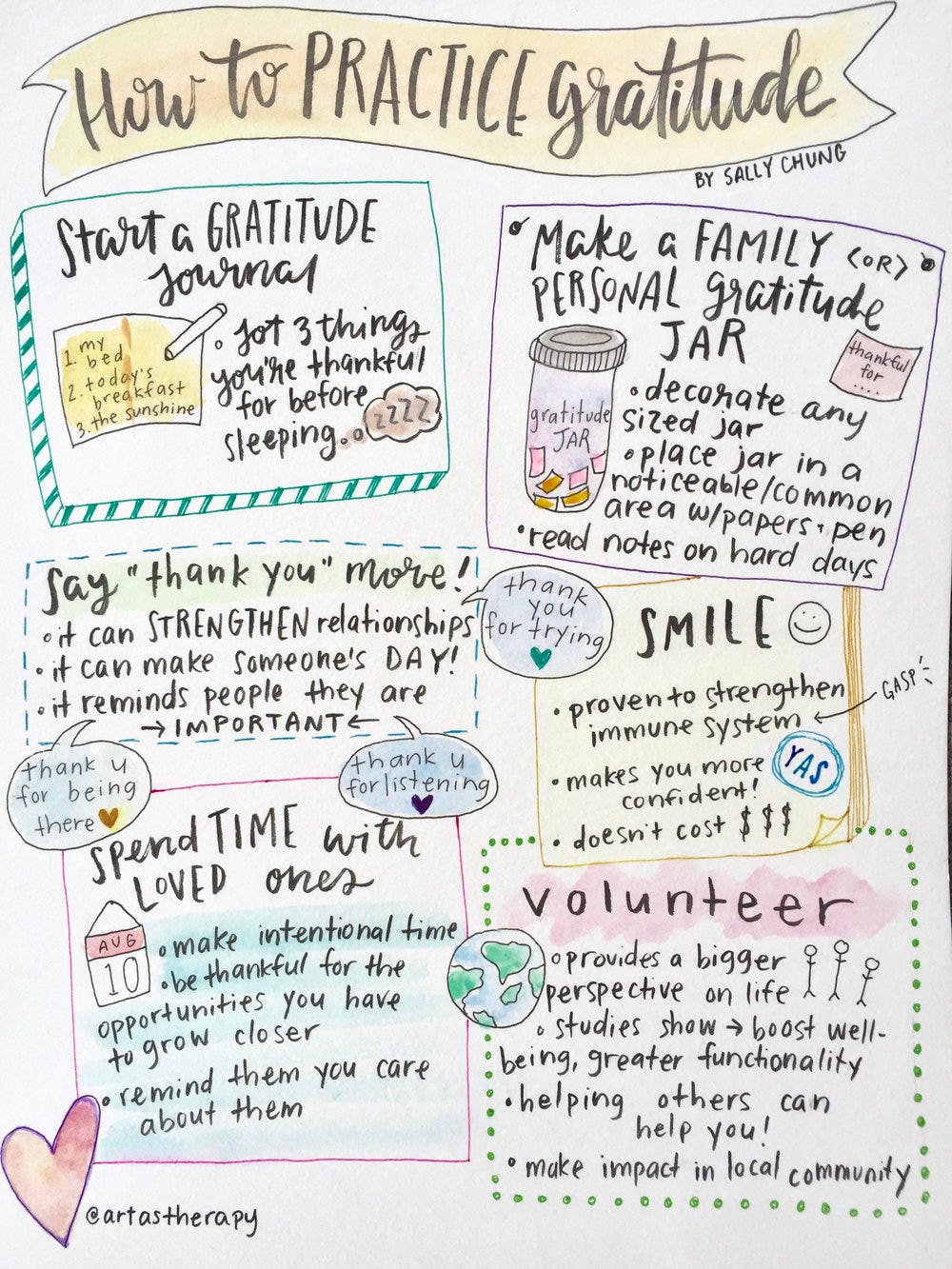
There are millions and millions of resources to validate the power of gratitude and it’s part of literally every non-fiction book or research but as we are talking about Harvard, in yet another Harvard study on Health, it is clearly stated that Giving thanks can make you happier.

If there’s any one takeaway you can take from this article, it should be to maintain a daily gratitude journal mentioning all the things you’re grateful for in the morning or at night. The more you focus on the good part of your life, the more your good life grows. That’s the core of the law of attraction principle.
3. Prioritize health
Good physical and mental health is crucial for a happy life. Exercise regularly, eat a healthy diet, get enough sleep, and prioritize self-care practices like meditation, journaling, or therapy because no matter whatsoever you are having, if you don’t have a good health, you’ll never be able to enjoy the good things in your life.
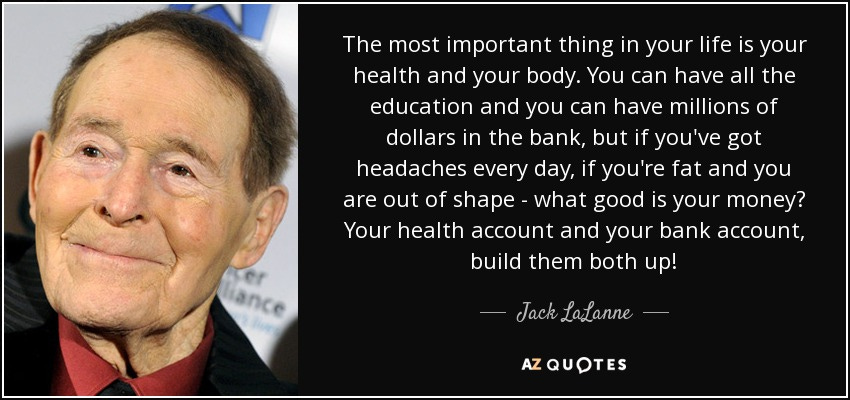
In Paul McKenna’s book, I Can Make You Happy, Exercising is one of the magical habits of happiness.
Paul states, “The scientific evidence states that happy people are more active than unhappy people. Exercise clears out all the stress chemicals from your body and rebalances your neurology and body chemistry. It physically changes the state of your mind and body and releases chemicals that helps you sleep better, make you feel good and has been the single most effective treatment for depression.”
4. Obstacle is the Way
Life is full of ups and downs, but those who are happiest tend to view challenges as opportunities for growth and learning. Ryan Holiday, one of the finest writers I admire, has laid out this concept of using obstacle as a feedback mechanism (more like a compass) to move ahead in life towards our better selves in his book Obstacle is the Way inspired by the Marcus Aurelius theory below - What stands in the way becomes the way!
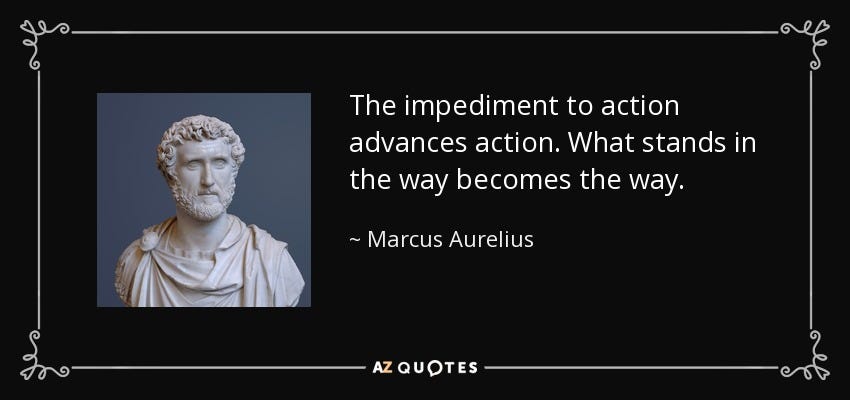
Ryan states, “Each time with every obstacle, you’ll learn something. Each time, you’ll develop strength, wisdom, and perspective. Each time, a little more of the competition falls away. Until all that is left is you: the best version of you.”
Growth Mindset - the ability to outgrow our own limitations and the believing that every single thing is learnable plays a significant role in moving ahead with life.
Whatever happens in your life is not happening TO you but it’s happening FOR you!
Rather than avoiding difficulty, embrace it and use it as a chance to build resilience and strength and that will lead you towards the happiest life with your best self.
5. Direct your own Netflix Documentary
Take your life as a movie (which it probably will be), and imagine yourself as the Director of your Netflix Documentary.
It’s your story, if you don’t like the ending, take control and take actions to change it. In moments of uncertainity, always behave how you would want your documentary’s hero to behave while watching it on Netflix and you’ll know what to do.

Taking control of your life as a series of your choices rather than something happening to you in random order when you don’t have any control is the key to get to the driving seat of your life and change the paths when you don’t like the journey.
There are a few more insights from the study.
Seek purpose: People who live fulfilling lives tend to have a sense of purpose or meaning in their lives. This can come from work, hobbies, volunteering, or other pursuits that align with your values and passions. Identify what matters most to you and seek out opportunities to pursue those interests.
Give back: Giving back to others can provide a sense of fulfillment and purpose. Whether through volunteering, donating to charity, or simply helping out a friend or neighbor, acts of kindness and generosity can improve your own well-being as well as that of those around you.
Practice forgiveness: Holding onto grudges and resentment can lead to negative emotions and stress. Practice forgiveness, both for yourself and others, to release those negative feelings and promote feelings of peace and contentment.
Conclusion
In conclusion, the Harvard study on happiness provides valuable insights into how to live a happy life. Cultivating strong relationships, practicing gratitude, prioritizing health, seeking purpose, embracing challenges, giving back, and practicing forgiveness are all key factors that can contribute to a fulfilling and happy life. By incorporating these practices into your daily routine, you can improve your own well-being and experience greater joy and satisfaction in life.
I hope this article helps you to work on yourself to live the best of your dream life and I would love to hear your life story as it all starts with a story and the lead character in search of finding their answers to life’s great questions!
Until then, stay curious and keep asking great questions.
Much love, Anjali <3
Happy and Peace are not the same words, can be complimentary or supplementary sometimes but even in some cases way too opposite to each other! The opinion of being happy always or being an ulterior motive behind our all our tasks seems flawed, being at peace with your activities or as a goal seems more relevant, because sometimes even the crying of a child might give you happiness and sadness for a different occasions, but peace doesn’t matter on occasion, it’s a self explanatory independent of any kind of situation.
Peace of mind, body or soul gives the ultimate meaning to our life, instead of just happiness, because happiness is a relative concept to our sadness, whereas peace is not!